
Revolutionary Trends in 3D Printing for 2026: Unlocking New Possibilities
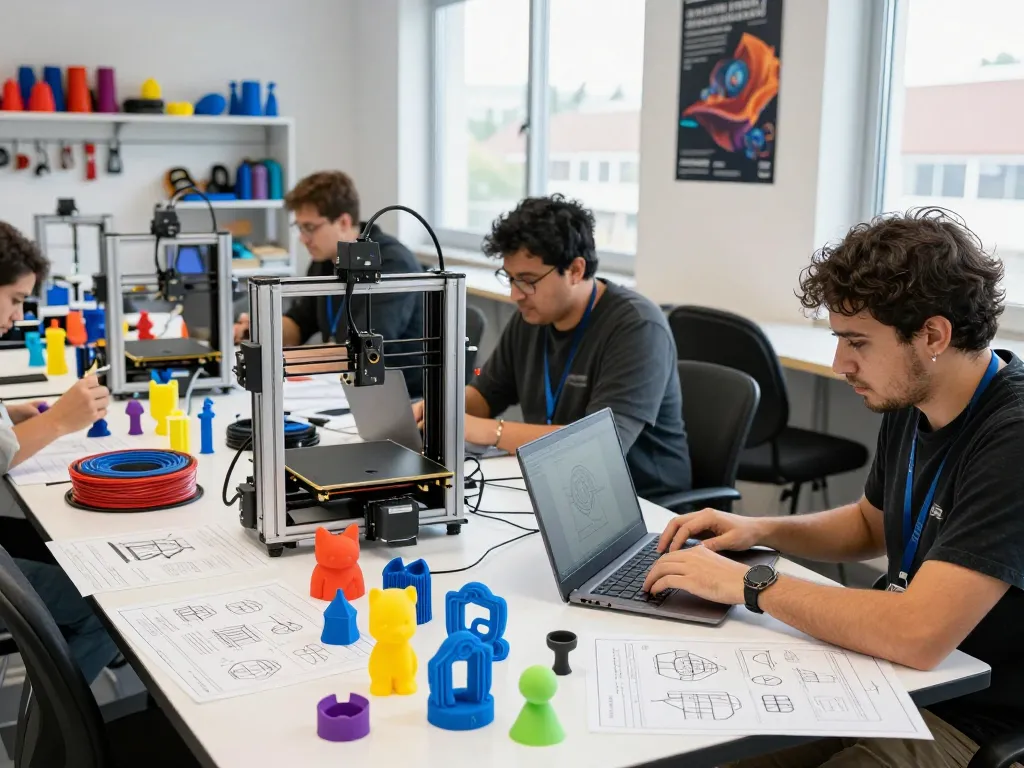
Introduction to 3D Printing: The Basics and Beyond
3D printing, also known as additive manufacturing, has revolutionized the way we create and design products across various industries. By enabling the construction of three-dimensional objects from digital models, this technology has opened up new avenues for innovation, customization, and efficiency. With its roots tracing back to the 1980s, 3D printing has evolved significantly, transitioning from a niche technology to a mainstream manufacturing approach. In this article, we will delve into the fundamentals of 3D printing, explore its applications across various sectors, discuss best practices, and look ahead at future trends shaping the landscape of 3D printing.
When exploring options, 3D printing provides comprehensive insights into both the technical and practical aspects of creating 3D models.
What is 3D Printing?
3D printing is a manufacturing process that builds objects layer by layer from a digital file. The process begins with a 3D model, typically created using computer-aided design (CAD) software, which is then sliced into thousands of horizontal layers. The printer then adds material, usually plastic, metal, or resin, layer by layer, bonding them together until the final product is achieved. This method stands in stark contrast to traditional subtractive manufacturing, where material is removed from a solid block.
The Evolution of Additive Manufacturing
Since its invention in 1984 by Chuck Hull, 3D printing has undergone significant advancements. Initially used for prototyping, it has now expanded into diverse fields, including aerospace, automotive, healthcare, and consumer products. Major milestones like the introduction of new materials, the development of faster printing techniques, and the integration of automation have fueled its growth. By the 2020s, it became common for businesses to leverage this technology for both prototyping and production, enabling shorter lead times and reduced costs.
Understanding 3D Printing Technologies
There are various 3D printing technologies available today, each suited for different applications:
- Fused Deposition Modeling (FDM): The most common technology, FDM extrudes melted thermoplastic to create objects layer by layer.
- Stereolithography (SLA): Uses a UV laser to cure liquid resin into solid parts, known for high accuracy and smooth finishes.
- Selective Laser Sintering (SLS): Utilizes a laser to fuse powdered material, allowing for more complex geometries.
- Material Jetting: Similar to inkjet printing, it deposits layers of liquid material that are cured by UV light.
Applications of 3D Printing Across Industries
3D Printing in Healthcare: Innovations and Benefits
The healthcare industry has embraced 3D printing for its ability to produce customized medical devices, prosthetics, and even bioprinted organs. Surgeons are able to create patient-specific anatomical models to plan complex surgeries, enhancing precision and outcomes. Additionally, the creation of implants and prosthetics can be tailored to fit individual patient needs, improving comfort and functionality.
How 3D Printing is Transforming Manufacturing
Manufacturers leverage 3D printing to streamline production processes, reduce waste, and facilitate rapid prototyping. This technology allows for the production of intricate parts that traditional manufacturing methods may struggle to create. Companies can produce lower volumes of parts without the need for expensive molds, making it cost-effective for custom and small-batch production.
Creative Uses of 3D Printing in Arts and Design
Artists and designers utilize 3D printing to push the boundaries of creativity. This technology allows for the exploration of complex shapes and forms that would be challenging to achieve with conventional techniques. From jewelry to sculpture, the possibilities are virtually limitless, enabling artists to bring their concepts to life with precision and ease.
Getting Started with 3D Printing: Equipment and Materials
Choosing the Right 3D Printer for Your Needs
Selecting the appropriate 3D printer depends largely on your intended applications, budget, and the materials you plan to use. Beginners might find FDM printers a good entry point due to their affordability and ease of use. For high-resolution needs, SLA printers may be more suitable, while SLS printers are ideal for more complex industrial applications. Researching and reading reviews can help you make an informed decision.
Filaments and Materials: What You Need to Know
Understanding the types of materials available for 3D printing is crucial. Common materials include:
- PLA (Polylactic Acid): A biodegradable thermoplastic, easy to print with, ideal for beginners.
- ABS (Acrylonitrile Butadiene Styrene): Durable and heat-resistant, suitable for functional parts.
- TPU (Thermoplastic Polyurethane): Flexible material used for applications requiring elasticity.
- Resins: Available for SLA printing, offering high detail and smooth finishes.
Setting Up Your 3D Printing Workspace
Creating an efficient workspace is key to successful 3D printing. Ensure adequate ventilation, organize your tools and materials, and designate a clean area to operate your printer. Additionally, be mindful of the noise and heat produced by some printers, which may affect your workspace comfort.
Overcoming Common Challenges in 3D Printing
Addressing Technical Issues with 3D Printers
Technical challenges are common in 3D printing, ranging from calibration issues to material jams. Regular maintenance, including cleaning the nozzle and bed, can help mitigate many problems. Additionally, familiarizing yourself with troubleshooting manuals or online forums can provide valuable insights on resolving issues.
Design Challenges: Best Practices for Success
When designing for 3D printing, consider factors such as overhangs, support structures, and material properties. Utilizing design software that allows for simulation can help identify potential printing issues before the actual process. Following best practices, such as maintaining proper wall thickness and minimizing support structures, can enhance the quality of your final product.
Cost Management in 3D Printing Projects
Cost is a critical consideration when embarking on 3D printing projects. Factors such as printer acquisition, material costs, and maintenance can add up. To optimize expenses, consider the volume of production and the type of materials used. For businesses, analyzing the return on investment (ROI) for using 3D printing versus traditional manufacturing techniques can provide clarity on cost benefits.
Future Trends in 3D Printing: What’s Next for 2026 and Beyond?
Advancements in 3D Printing Technology
The future of 3D printing looks promising, with continuous advancements driving innovation. Technologies like multi-material printing and improved speed and precision are on the horizon. Furthermore, the integration of robotics and automation in 3D printing processes is set to enhance production efficiency and scalability.
Impact of Sustainability in 3D Printing Practices
Sustainability is becoming increasingly important, and 3D printing holds potential for more environmentally friendly manufacturing practices. By reducing waste through additive processes and using recyclable materials, 3D printing companies can contribute to a more sustainable future. Efforts are underway to develop bio-based filaments that minimize environmental impact further.
Exploring the Role of AI in 3D Printing Innovation
The integration of artificial intelligence (AI) in 3D printing is set to revolutionize the industry. AI can optimize print settings, predict maintenance needs, and even aid in design processes, enhancing efficiency and reducing errors. As AI technologies evolve, their applications within the realm of 3D printing are likely to expand, unlocking new possibilities.
What are the best practices for designing 3D models?
Designing 3D models requires understanding your printer’s limitations, selecting appropriate software, and considering the material properties. Always test your designs, use supports wisely, and maintain a clear, concise modeling approach to avoid complex errors during printing.
How much does 3D printing cost for personal projects?
The cost of 3D printing for personal projects can vary significantly based on printer type, materials, and project complexity. Hobbyist printers can start around $300, while professional-grade printers can reach $50,000 or more. Material costs also fluctuate based on quality and type, but most hobbyist filament averages between $20 to $40 per kilogram.
What industries benefit most from 3D printing?
3D printing benefits various industries, including healthcare, aerospace, automotive, and consumer products. Its ability to produce customized, lightweight parts and to enable rapid prototyping makes it invaluable across these sectors.
How do I maintain my 3D printer?
Regular maintenance involves cleaning the print bed, checking the nozzle for clogs, and calibrating the printer to ensure optimal performance. Always refer to the manufacturer’s guidelines for specific maintenance recommendations.
What are the latest materials used in 3D printing?
The latest materials include advanced composites, biocompatible materials for healthcare applications, and high-temperature plastics suitable for aerospace. Research is ongoing to discover even more innovative solutions.