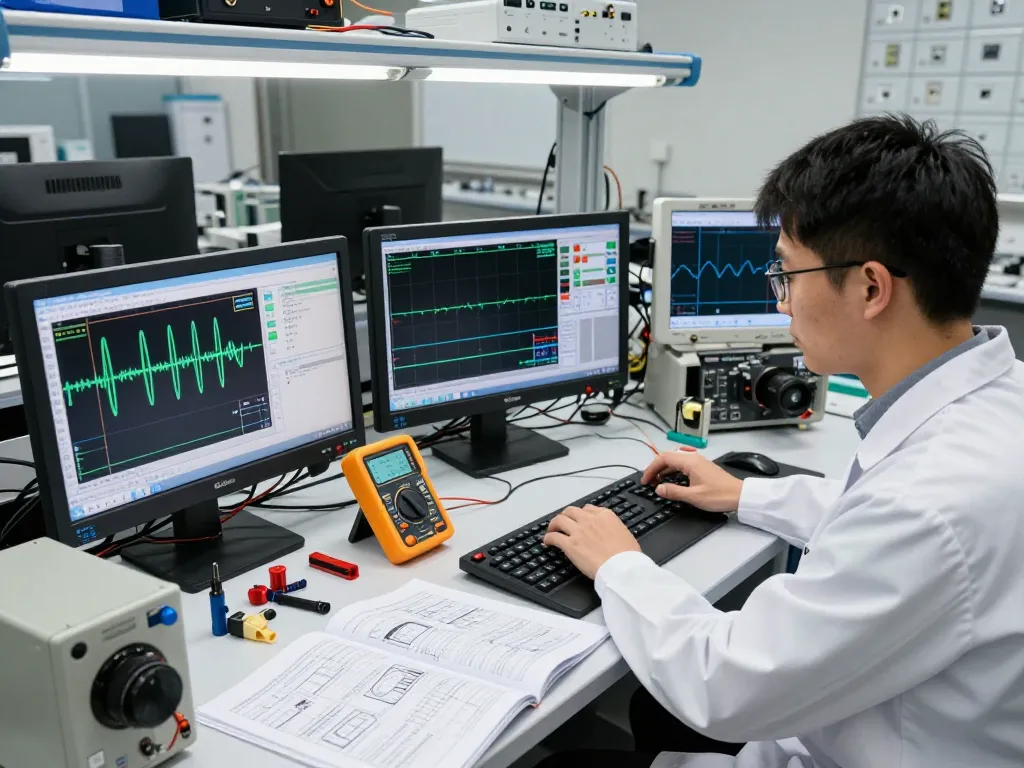
Understanding the Basics of Oscilloscopes and Multimeters
When navigating the world of electronic testing and diagnostics, two instruments often come into play: oscilloscopes and multimeters. These tools serve distinct yet complementary functions, making them crucial for engineers, technicians, and hobbyists alike. In this article, we will delve deep into the functionalities and applications of these devices, particularly focusing on the differences and intersections between them to help you make informed decisions when it comes to selecting the right tool for your needs. For those looking to make a direct comparison, the oscilloscope vs multimeter debate is a great starting point.
What is an Oscilloscope?
An oscilloscope is a sophisticated electronic instrument used primarily for observing the changing signal voltages over time. In its simplest form, it provides a graphical representation of voltage signals, allowing users to visualize electrical signals in real-time. Oscilloscopes are essential in analyzing the waveform characteristics of signals such as frequency, amplitude, and time delay, making them invaluable for engineers and technicians working with complex electronic systems.
What is a Multimeter?
A multimeter, on the other hand, is predominantly a measurement tool that can evaluate various electrical properties, including voltage, current, and resistance. Available in both analog and digital formats, a multimeter provides numerical readings and is essential for troubleshooting electrical circuits. While multimeters can measure AC and DC voltages, they lack the ability to visualize changes over time, which is where oscilloscopes excel.
Key Differences Between Oscilloscopes and Multimeters
Understanding the differences between oscilloscopes and multimeters is fundamental to selecting the right tool for your specific requirements. The main distinctions reside in their functionalities:
- Data Representation: Oscilloscopes display data in graphical form, while multimeters provide numerical outputs.
- Measurement Capabilities: Oscilloscopes are ideal for measuring changing signals in real-time, whereas multimeters are excellent for static measurements.
- Use Cases: Oscilloscopes are more suited for signal analysis, while multimeters are frequently used for general testing and troubleshooting.
In-Depth Comparison: Oscilloscope vs Multimeter
Functionality Overview
The functionality of oscilloscopes and multimeters can be assessed based on their operational capabilities. Oscilloscopes excel in visualizing multiple signal waveforms, allowing users to see how signals interact, their timing, and how they change over time. Multimeters, in contrast, are primarily used for measuring voltage, current, and resistance in circuits, providing precise readings that can quickly diagnose electrical issues.
Accuracy and Measurement Capabilities
When it comes to accuracy, multimeters often hold an edge for static measurements since they can provide precise numerical values under stable conditions. However, oscilloscopes are unmatched for assessing dynamic signals and analyzing complex waveforms, making them essential for tasks that involve signal integrity and timing analysis.
Use Cases: When to Choose Which Tool?
The choice between an oscilloscope and a multimeter often depends on the specific tasks at hand:
- Oscilloscope: Best for analyzing high-frequency signals, troubleshooting complex electronic systems, and investigating transient phenomena.
- Multimeter: Recommended for standard voltage and resistance measurements, routine maintenance, and simple troubleshooting tasks.
Practical Applications of Oscilloscopes and Multimeters
Signal Analysis in Engineering
Engineers frequently rely on oscilloscopes for signal analysis in various applications, such as designing circuits, testing signal integrity, and debugging high-speed communications. The ability to visualize signals on an oscilloscope enables professionals to troubleshoot issues that may not be apparent through numerical measurements alone.
Testing Electrical Circuits in Educational Environments
In educational settings, both oscilloscopes and multimeters are invaluable. Oscilloscopes help students learn about signal behavior in circuits, while multimeters are used for straightforward electrical measurements, reinforcing theoretical concepts with practical skills.
Field Applications for Professionals
Professionals in the field, such as electricians and technicians, commonly use multimeters for immediate electrical system diagnostics. Oscilloscopes can be beneficial in advanced troubleshooting scenarios where signal behavior must be monitored in real-time, such as in automotive electronics or telecommunications.
Choosing the Right Tool for Your Needs
Factors to Consider When Buying
When selecting between an oscilloscope and a multimeter, several factors should be considered:
- Required Functionality: Determine whether you need waveform visualization or precise numerical measurements.
- Budget: High-performance oscilloscopes can be more expensive than multimeters, which vary widely in price based on features.
- Portability: Consider whether you need a compact, portable solution for fieldwork or if a stationary bench model is more suitable.
Budgeting for Precision Instruments
Investing in quality measurement instruments is crucial for accurate diagnostics. While oscilloscopes generally carry a higher cost than multimeters, the investment can pay off in the long run through enhanced precision and functionality. A well-rated model, such as those offered by Hanmatek, can provide users with the capability to perform a wide range of tasks effectively.
Recommended Brands and Models in 2026
For those looking to purchase oscilloscopes or multimeters in 2026, several brands are renowned for their reliability and performance. Hanmatek’s range of benchtop oscilloscopes, for example, includes models like the DOS1104 and DOS1202, known for their accuracy, ease of use, and robust build quality, catering to both professionals and enthusiasts.
Future Trends in Measurement Technology
Emerging Technologies in Oscilloscope and Multimeter Development
As technology evolves, so do the capabilities of oscilloscopes and multimeters. Innovations such as enhanced digital signal processing, integration with mobile applications, and advanced user interfaces are becoming standard. These features allow for more efficient data analysis and visualization, making the tools even more user-friendly.
AI and Data Analysis Integration
Artificial intelligence is increasingly making its way into measurement technology, enabling smarter diagnostics and data interpretation. As AI algorithms evolve, they can aid users in identifying patterns and anomalies within the data collected, enhancing the analytical capabilities of both oscilloscopes and multimeters.
Predictions for Oscilloscope and Multimeter Evolution
Looking ahead, it is likely that oscilloscopes will become even more sophisticated, incorporating features like automated measurement capabilities and advanced connectivity options. Multimeters may also evolve to provide enhanced functionality, such as integrated wireless communications and app connectivity.
What Makes Oscilloscopes and Multimeters Essential?
Both oscilloscopes and multimeters are essential tools in the toolkit of anyone working with electronics. They offer complementary capabilities, with oscilloscopes providing dynamic insights into signal behavior, while multimeters deliver precise, reliable measurements for troubleshooting and testing.
Can Oscilloscopes Replace Multimeters?
While some advanced oscilloscopes integrate functionalities that allow them to perform basic multimeter tasks, they cannot entirely replace multimeters. Multimeters are designed for specific electrical measurements with greater accuracy and efficiency, making them essential for tasks that require precise voltage, current, and resistance readings.
Which Tool Offers Better Value for Money?
The value offered by an oscilloscope versus a multimeter largely depends on the specific needs of the user. For those focused on intricate signal analysis and high-frequency measurements, oscilloscopes provide unparalleled value. Conversely, for general troubleshooting, multimeters often present a more cost-effective solution.