Every Handheld Oscilloscope Option Ranked from Best to Worst for 2026
Understanding Handheld Oscilloscopes
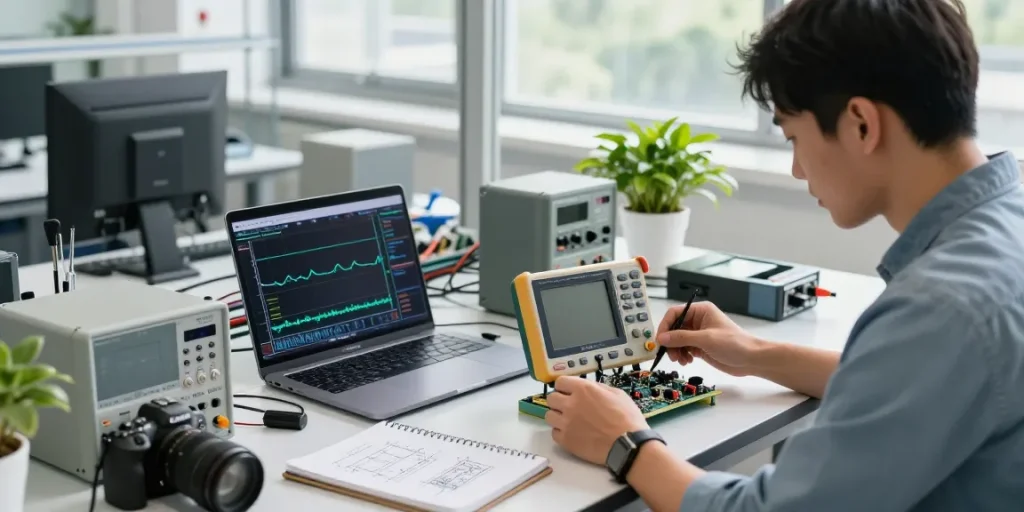
In the world of electronics, a handheld oscilloscope is an invaluable tool for engineers, technicians, and hobbyists alike. These compact devices enable users to visually analyze electrical signals, making them essential for troubleshooting, diagnostics, and laboratory experiments. The advanced features found in modern handheld oscilloscopes, such as the HANMATEK® HO11, significantly enhance their usability and effectiveness in various applications. When exploring options, Handheld Oscilloscope models provide comprehensive insights and capabilities that are crucial for both professionals and enthusiasts.
What is a Handheld Oscilloscope?
A handheld oscilloscope is a portable electronic device designed to measure and display voltage signals over time. Unlike traditional benchtop models, handheld oscilloscopes are compact, lightweight, and often battery-operated, allowing for versatility in various environments. These instruments are equipped with probes that capture electrical signals from components or systems, which are then processed and visualized on a digital display. The portability and ease of use make them ideal for fieldwork as well as educational purposes.
Key Features to Look For
- Bandwidth: A critical specification that determines the maximum frequency a device can measure. Higher bandwidth allows for more accurate representation of fast signals.
- Sampling Rate: This affects how frequently the oscilloscope takes readings, which impacts the resolution of the displayed waveform.
- Display Quality: A clear and intuitive display is essential for real-time waveform analysis, with sizes typically ranging from 2.8 inches to larger formats.
- Battery Life: Long-lasting battery operation ensures that users can perform tasks without being tethered to a power outlet.
- Measurement Capabilities: Advanced models can offer multiple measurement functions such as frequency, duty cycle, and peak-to-peak voltage, adding value to the overall usability.
Benefits of Using a Handheld Oscilloscope
Handheld oscilloscopes provide numerous advantages that cater to diverse applications. First and foremost, their portability means that they can be easily transported to various job sites or educational environments. This aspect is particularly beneficial for fieldwork, where conditions may be less than ideal for larger, stationary equipment. Additionally, the user-friendly interface and automated functions found in many handheld models streamline the measurement process, making it accessible to novices and skilled professionals alike.
How Handheld Oscilloscopes Work
Understanding the operational mechanics of handheld oscilloscopes can enhance their efficacy during use. These devices function by converting electrical signals into visual representations that can be monitored and analysed in real-time. The interplay of hardware and software components within the oscilloscope facilitates this transformation, ultimately aiding in diagnostics and measurements.
Basic Operating Principles
The core functionality of a handheld oscilloscope is based on the conversion of analog signals into digital data. The device’s internal ADC (Analog-to-Digital Converter) samples the incoming signal at specified intervals, translating these values into a graph that depicts voltage over time. Users can manipulate various settings, such as time base and voltage scale, to get the best visual representation of the signal they are analysing.
Components of a Handheld Oscilloscope
- Probes: These are the critical tools for connecting the oscilloscope to the circuit under test. Probes can affect measurement accuracy, so it’s vital to choose ones that suit your specific tasks.
- Display Screen: A key component for real-time visualisation of measurements. Higher quality displays can often show detailed waveforms, making analysis easier.
- Control Interface: User-friendly control panels make navigation and measurement adjustments straightforward, thereby improving workflow efficiency.
- Batteries: A robust battery enables portable operations, crucial for users frequently working in locations without direct power access.
Signal Measurement Techniques
Handheld oscilloscopes can measure several parameters of an electrical signal. Core measurements include:
- Peak-to-Peak Voltage: The difference between the maximum and minimum voltage levels of the waveform.
- Frequency: The number of cycles the waveform completes in one second, measured in Hertz (Hz).
- Duty Cycle: The proportion of one cycle in which the signal is active compared to the total period of the cycle.
Applications of Handheld Oscilloscopes
The applications of handheld oscilloscopes are diverse, extending across many sectors including electronics, education, and automotive diagnostics. Their versatility makes them essential tools in any technician’s or engineer’s repertoire.
Electronics Troubleshooting
One of the primary uses of handheld oscilloscopes is for troubleshooting electronic circuits. Technicians can diagnose issues such as signal distortion, voltage fluctuations, and intermittent failures. By analysing the waveform, they can identify faults in signal integrity or component failure.
Education and Training Uses
In educational settings, handheld oscilloscopes serve as teaching tools for students learning about electronics and signal analysis. Their practical use aids in understanding complex concepts while allowing students to conduct hands-on experiments.
Field Measurements and Diagnostics
Many professionals in fields ranging from telecommunications to automotive repair rely on handheld oscilloscopes for on-site measurements. Their portability allows technicians to take accurate measurements directly at the point of application, providing immediate insights into the performance of electronic systems.
Best Practices for Using Handheld Oscilloscopes
To maximise the utility of handheld oscilloscopes, users should adhere to certain best practices. From setting up the device correctly to understanding its limitations, these practices ensure accurate and reliable measurements.
Setup and Calibration Steps
- Power On: Ensure the device is charged and power it on.
- Connect Probes: Attach the probes securely to the measurement points.
- Adjust Vertical and Horizontal Scale: Set the voltage and time scale for optimal waveform display.
- Set Trigger: Adjust trigger settings to stabilise the displayed waveform.
- Observe Waveform: Monitor the signal and make adjustments as necessary.
- Capture Data: Use snapshot features to store waveforms for later analysis.
- Recharge: Ensure the device is recharged after use to maintain battery health.
Common Mistakes to Avoid
Users should be mindful of common pitfalls that can lead to inaccurate readings or misunderstandings:
- Incorrect probe placement: Always ensure proper connection to the point of measurement.
- Inadequate scaling: Not adjusting the scale can lead to clipped waveforms, distorting the true signal.
- Neglecting calibration: Always calibrate the device as per the manufacturer’s guidelines to maintain accuracy.
Optimising Measurement Accuracy
For the best measurement outcomes, consider the following tips:
- Choose appropriate probes that match your measurement needs.
- Minimise electrical noise by maintaining good grounding practices.
- Regularly maintain and calibrate your oscilloscope to ensure it performs optimally.
Future Trends in Handheld Oscilloscope Technology
The landscape of handheld oscilloscopes is evolving rapidly, driven by advancements in technology and user demand. As we look towards 2026, several trends are emerging that will shape the future capabilities of these devices.
Emerging Technologies in Measurement
Integration of wireless connectivity will enable remote monitoring and control of oscilloscopes, allowing users to conduct tests from a distance. Additionally, the incorporation of AI-driven analytics will enhance diagnostic capabilities, providing users with immediate feedback on signal integrity and potential issues.
Predicted Enhancements for 2026
Future models are expected to feature higher bandwidths and sampling rates, accommodating more complex and faster signals. Furthermore, improved battery technologies could lead to longer operational periods without recharging, enhancing portability.
Expert Insights on Industry Developments
Industry experts predict that handheld oscilloscopes will continue to see enhancements in user interface design, making them more intuitive and user-friendly. As the demand for portable and efficient electronic testing solutions grows, manufacturers are likely to prioritise features that facilitate seamless user experiences.